A birthday is more than a day on the calendar
Some dates come up often in birth records. Others stand out. This free birthday rarity calculator compares your month and day with all 366 possible dates, using 62,187,024 U.S. birth records from 2000–2014. Choose a date to see its rank, its approximate “1 in” frequency and how it compares with other calendar dates. You do not need to enter a birth year.
The result is a historical comparison, not a count of everyone alive with your birthday. The methodology explains the population, the calculation and why the leap-day result needs special care. We keep that context on the downloadable card too.
Find your date, then explore its neighbors
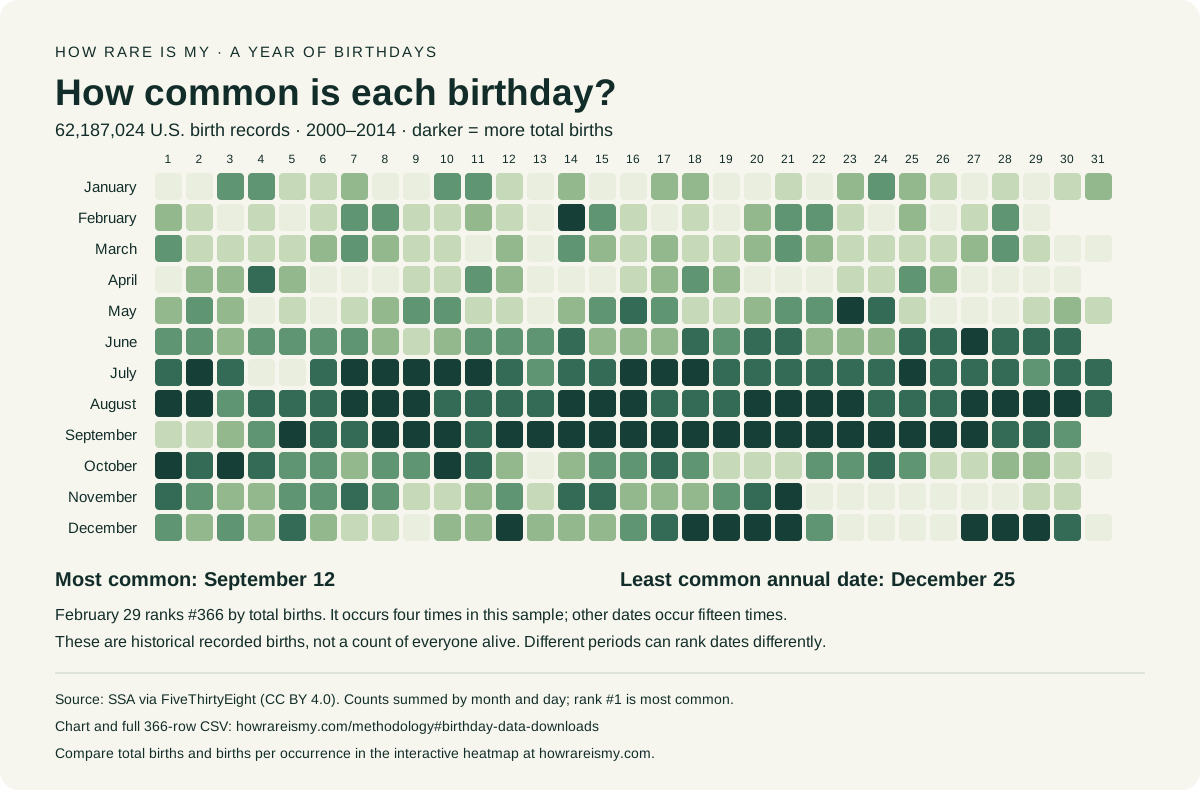
The birthday heatmap brings all 366 dates into one view. Darker squares have higher birth counts; select a square to update your result and its marker in the rank chart. Total births keeps leap-day frequency in the numbers. Per occurrence compares average births when a date actually occurs, so it gives a different rank for February 29. The main rarity card always uses total births. On a phone, the grid turns so all twelve months stay visible.
The monthly bars divide births by observed days in each month, so a longer month does not get a higher bar just for having more days. Choose Save infographic to keep the heatmap, selected date and charts together in a free PNG, with the source and measure attached.
Month labels open complete tables. Looking for May 14? Go straight to May 14 in the May rankings. A New Year birthday is in the January 1 row; a leap birthday has its own row in February. Every row includes its national rank and average births each time the date occurred.
For a wider comparison, explore the 30 rarest birthdays and the 30 most common birthdays. These use the same source and formula as the calculator, so the answers agree.
Want to compare with a friend? After finding your result, open Compare with another birthday and choose their month and day. You will see the two ranks, frequencies and recorded birth counts side by side. Both use the same historical sample. February 29 still includes its lower calendar frequency, so this compares total births rather than births each time a date occurs.
Put a few of your facts on one card
For a classroom, handout or your own analysis, download the full birthday heatmap and 366-row data table. The public reference has no selected personal birthday, and its CSV keeps total births, occurrences and the historical denominator together.
Your birthday is the beginning. Find how rare your first name was in a birth year, or look up your surname in the U.S. Census. The card maker combines the results into one image while keeping each comparison group visible. Names, surnames and birthdays are not independent measurements of personal uniqueness, so their probabilities are never multiplied together.
Choose Add another fact beside your result to build a combined card without re-entering your birthday. Preview & style your card lets you see the actual image in Sage, Lilac or Midnight, in a portrait story or landscape size. You can also open a birthday share link with a preview of that date’s result. No account, upload or payment is needed. Personal names are looked up in your browser; see privacy for website delivery and analytics details.
Curious about the language you use at home? The language rarity tool compares published U.S. home-language estimates and makes a separate share card, with its own source and period.
You can also find your adult height percentile. Choose an age group, compare your height with measured U.S. adults, and keep the source on a downloadable card. A height percentile describes a different comparison from birthday frequency; neither turns into a combined personal-rarity score.
More questions about you
Your birthday is one kind of comparison. Explore the blood-type chart for eight main groups across three labelled references, or try the eye-color checker for a published U.S. survey. The adult height calculator puts your measurement against CDC percentiles. Each reference stays separate, with its own population and source on the result card.
How rare is your car?
The UK car rarity lookup adds a different kind of curiosity: how many cars share your recorded model. Search licensed and off-road counts, compare two models, and explore a quarterly history. The source is DfT / DVLA, with UK figures through June 2026. It is a separate reference from the U.S. birthday data above.
Keep the chart. Check the numbers.
A printable view of all 366 birthdays, plus the full table for your own spreadsheet. Both use the same 2000–2014 U.S. birth records as this calculator.
Download printable SVG Download all 366 dates (CSV)
Data: SSA via FiveThirtyEight, CC BY 4.0. We aggregate daily records by month and day. The CSV keeps counts, occurrences, ranks and the denominator so the result can be checked. Cite our sources and calculation when referring to these rankings.
Good questions
What is the rarest birthday?
February 29 has the fewest births across this 2000–2014 U.S. dataset because it occurs only four times. Among dates that occur every year, December 25 has the fewest recorded births.
What is the most common birthday?
September 12 ranks first in this SSA 2000–2014 sample. Other sources and periods can give a different answer, so a ranking needs a source and date range.
Can I use the card as a birthday filter?
You can save a portrait PNG and add it to a story, video or message. This site makes image cards; it is not an official TikTok or Instagram camera filter.