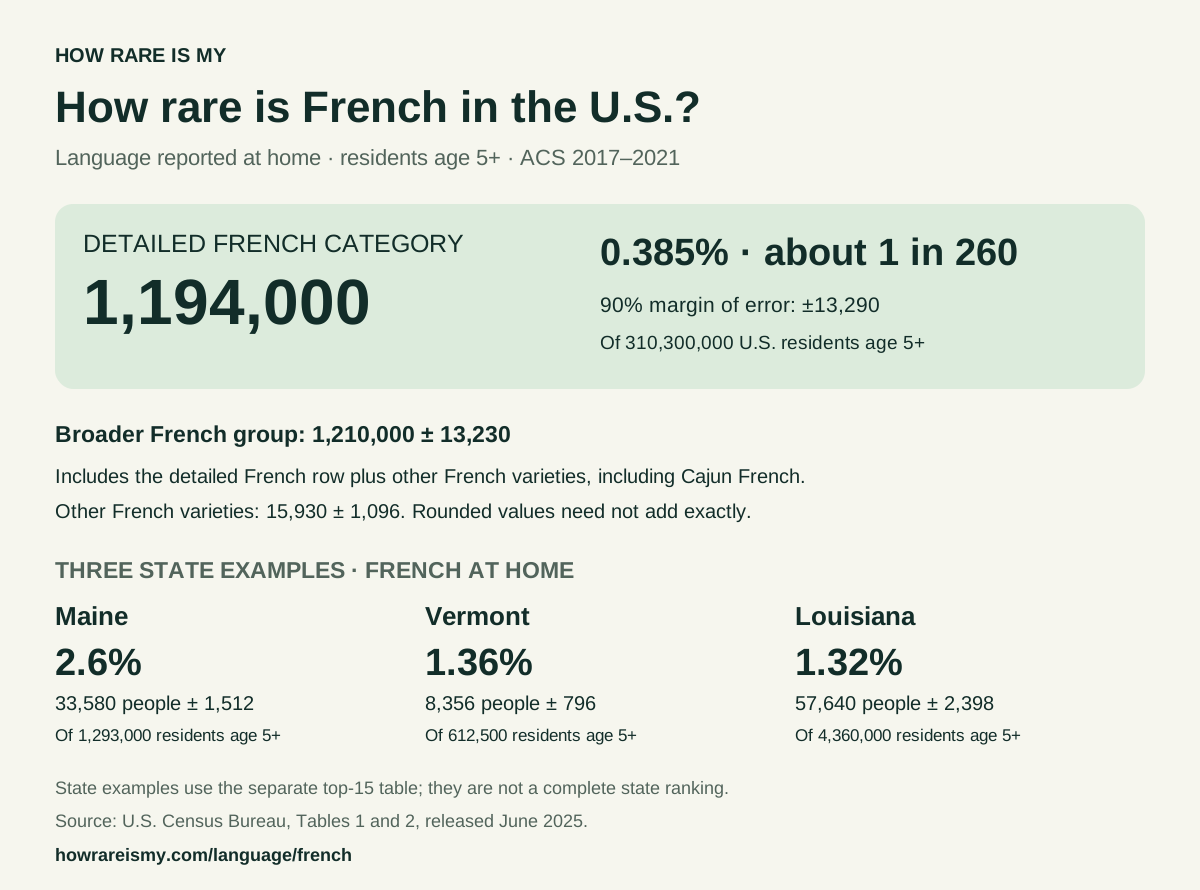
Broader French group1,210,00090% margin of error ± 13,230
French1,194,00090% margin of error ± 13,290
Other French languages including Cajun French15,93090% margin of error ± 1,096
The two detailed estimates total 1,209,930; the independently rounded group estimate is 1,210,000. Never add the parent total to its children. Source: ACS 2017–2021, U.S. residents age 5+.
French at home in three states
Examples from the separate state top-15 table, using its “French” category and each state’s own age-5+ population. These are not a complete ranking of states.
Maine
2.6%
33,580 people ± 1,512
Out of 1,293,000 residents age 5+
Vermont
1.36%
8,356 people ± 796
Out of 612,500 residents age 5+
Louisiana
1.32%
57,640 people ± 2,398
Out of 4,360,000 residents age 5+
French has the largest non-English point estimate in Maine and Vermont in this release. Explore the state tables to see the other reported categories and their uncertainty.
What the French rarity number means
The detailed French category represents 1,194,000 out of 310,300,000 U.S. residents age 5 and over in the 2017–2021 American Community Survey. Dividing those estimates gives about 0.385%, or 1 in 260 after rounding. The count has a 90% margin of error of ±13,290 people.
This describes French reported at home. It does not estimate how many Americans studied French, can hold a conversation in it, or use it at work. It also cannot tell you how rare French is worldwide. A person can know French without reporting it as their home language. The Census release was published in June 2025, but its estimates describe 2017–2021 rather than today's population.
French, Cajun French and the broader group
The workbook contains two levels of French data. Its broader French group has an estimate of 1,210,000. Inside that group are the detailed French row and Other French languages including Cajun French, with an estimate of 15,930. Those rows are alternatives for describing the same hierarchy, not three independent populations.
The broader label is useful when comparing French varieties together. The detailed row is the initial result shown here. The “other French” row does not isolate Cajun French, so we do not relabel its full count as Cajun speakers. Independently rounded source values also explain the small difference between the sum of the two detailed rows and the published group total.
Where is French more common?
National rarity hides regional variation. In the separate state table, French is the largest reported non-English category by point estimate in Maine and Vermont. Maine's French estimate is 33,580 among 1,293,000 residents age 5+, approximately 2.60%. Vermont's is 8,356 among 612,500, approximately 1.36%. Louisiana provides another example: 57,640 among 4,360,000, approximately 1.32%.
These are selected examples with their own state denominators. The table publishes only fifteen non-English categories per state, so a language absent from a state's list must not be treated as having no speakers. Open the language-by-state explorer for the full published lists and count margins of error.
Make a French rarity card or compare another language
The tool starts with the detailed French result. Use Preview & style your card to choose its palette and image size. The exported image keeps the population, period and uncertainty alongside the number. Selecting a broader group changes the result to that group's own estimate.
To compare this with a different language, use the second picker above or open the complete language rarity tool. The national language chart puts French alongside other published categories. Comparisons describe the records; they do not measure cultural importance, fluency or how unusual an individual person is.
Good questions
How many people speak French at home in the U.S.?
The detailed French category estimates 1,194,000 U.S. residents age 5 and over, with a 90% margin of error of ±13,290, in the 2017–2021 ACS. The broader French group, including other French varieties, estimates 1,210,000. Neither number counts everyone who knows French.
Is French rarer than Spanish in this data?
Yes. The detailed French estimate is 1,194,000, compared with 41,160,000 in the source's Spanish and related languages group. These categories have different breadth, but both describe reported U.S. home-language use in the same period.
Does the French count include Cajun French?
The broader French group includes a separate category called Other French languages including Cajun French, estimated at 15,930 ±1,096. That entire category is not a Cajun-only count. The detailed French row is separate.
Can I make a French language rarity filter card?
Yes. Preview the French result, choose a style, and save a story or landscape PNG. This is a downloadable card, not a camera effect. The U.S. population, survey period and margin of error remain on it.