Find a name that sounds like them
Use the generator to make a shortlist. Starts with finds a matching prefix, while 2–5 keeps names of two to five characters. Under Records per name, 3–10 selects uncommon names in this particular extract; 100+ selects names with at least 100 records. Filters update the suggestions immediately. Generate again to see another random selection from the same matching names.
The generator samples spellings equally, rather than making popular names more likely to appear. Its suggestions use short letter-based spellings with at least three records. The separate dog-name rarity lookup also finds single-record names and more complex spellings from the full catalogue. These are observed names, not generated claims about a name’s meaning or origin.
Click any suggestion to open its count and share card. Use Shortlist to keep up to twelve favorites while you try other filters. Save list · TXT downloads those names with their record counts and source. The shortlist stays only on this page and clears on refresh. You can narrow to names recorded with female or male dogs, but those filters describe the administrative records, not rules for choosing a name. The displayed frequency always combines both categories.
What a name’s frequency tells you
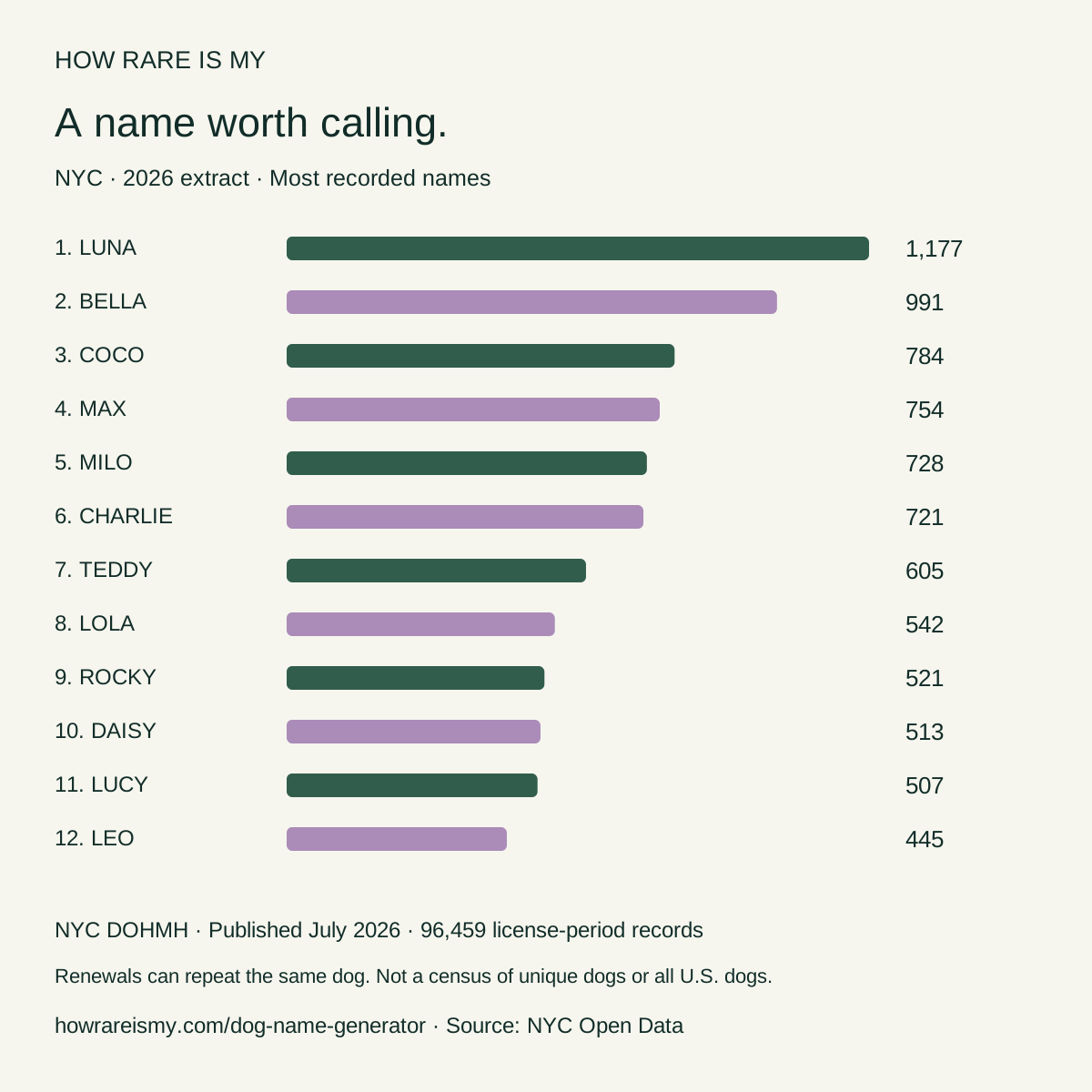
The NYC Dog Licensing Dataset comes from the city’s Department of Health and Mental Hygiene. We use the rows labelled extract_year 2026, published on 15 July 2026. This extract contains 96,459 license-period records.
A record represents an active license period. A renewal can create another record for the same dog. Accordingly, 1,177 Luna records does not mean 1,177 different dogs named Luna. It also does not measure every dog in New York City, the United States or the world. The extract label is not a claim to cover all activity during the full 2026 calendar year.
We combine matching spellings across the female and male categories, ignoring case and repeated spaces while retaining punctuation and accents. 2,879 records with blank, UNKNOWN, NAME NOT PROVIDED or NONE name labels remain in the denominator. They do not appear as names in the ranking or generator. Tied counts share a rank, with #1 the most recorded name.
The downloadable chart shows the twelve most recorded names. The complete CSV contains all 14,658 retained spellings, female and male counts, and an unclassified-name total so the numbers add back to the source.
A card for your best friend
Check a name, open the card preview, choose a palette and save a story or landscape image. Each card keeps the name, record count, NYC scope and the renewal explanation. Your typed name stays in the browser; you do not need to upload a photo or create an account.
To explore your own name, use the first-name tool and popularity history or the surname explorer. Those tools use different human populations and years; their percentages should not be combined with dog-license frequencies. The sources and method explain each reference.
Good questions
How does the dog name generator work?
Choose a starting letter, length, frequency or recorded sex, and see up to twelve matching names; generate again for a fresh set. Suggestions come from actual NYC license records and sample matching spellings equally. We use names with at least three records and simple letter-based spellings for suggestions; the lookup covers the wider published catalogue.
How rare is my dog’s name?
Enter the name to see its count, rank and share of 96,459 license-period records in the NYC dataset’s 2026 extract. These are local administrative records. Renewals can count the same dog more than once, so the result is not a count of unique dogs or a nationwide rarity estimate.
Can I find unusual female or male dog names?
Choose 3–10 under Records per name for uncommon names, then optionally filter for names recorded with female or male dogs. The frequency filter uses the combined count; the sex filter requires at least one record in that category. Names can be used for any dog.
What if my dog’s name is missing?
A missing spelling has no match in this extract. It does not mean the name is unique or unused elsewhere. Matching ignores case and extra spaces but preserves accents and punctuation. Try an alternative spelling if appropriate.
Does this include every dog in New York?
No. It covers published license-period records, not every dog. The 2026 extract was published in July 2026 and is not a complete calendar-year count. Missing-name labels stay in the denominator but are excluded from name rankings and suggestions.