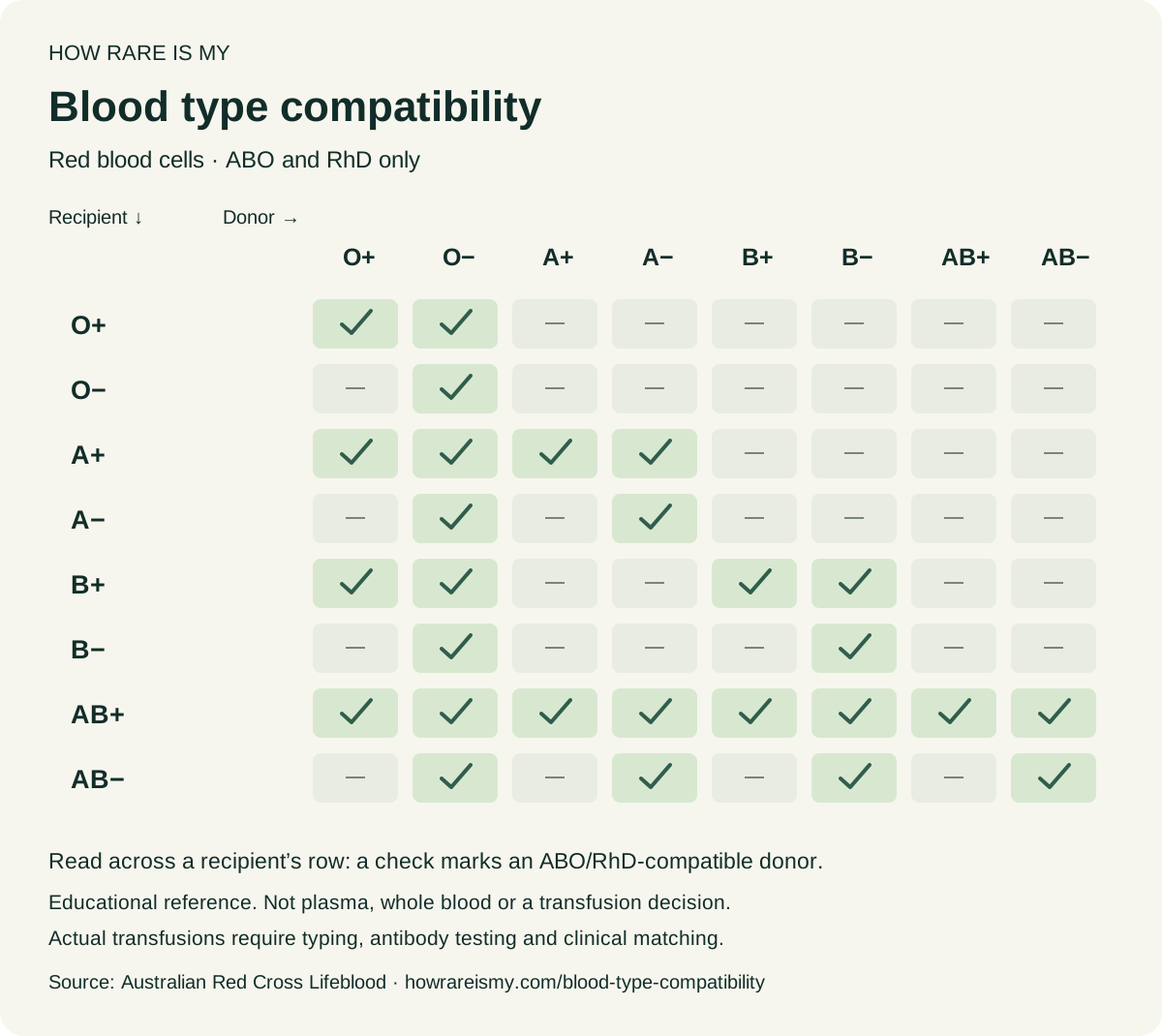
How to read the blood compatibility chart
Rows are recipients. Columns are donors. Start at the blood type of the person receiving red cells and read across that row. A check marks a donor type that is compatible in the simplified ABO/RhD model; a dash means it is not.
Choose a type above the chart to see both directions in words: which groups can provide red cells to it, and which groups can receive red cells from it. Those directions matter. A donor-to-recipient relationship does not automatically work in reverse.
For example, the A-positive row has checks under A positive, A negative, O positive and O negative. Its red-cell donation list contains A positive and AB positive. You can inspect every row directly or download the complete chart for reference.
What this chart covers
The matrix follows the Australian Red Cross Lifeblood blood-type table. It covers red-cell compatibility in the ABO and RhD systems. The positive or negative sign refers to RhD; it does not describe every antigen on a red cell.
The American Red Cross explains why typing and cross-matching are necessary. Patient antibodies and other blood-group systems can make a superficially compatible match unsuitable. This is an educational chart, not a decision tool for giving or receiving a transfusion.
Why plasma is different
Red-cell and plasma compatibility cannot use the same check marks. In a simplified ABO comparison, red-cell matching considers donor cells and recipient antibodies, while plasma matching considers antibodies in the donated plasma. The Red Cross identifies AB as the universal plasma donor group. That does not make AB the universal red-cell donor.
The downloadable SVG says red cells explicitly and retains the source and scope. Do not use it as a plasma, platelet or whole-blood transfusion chart.
Compatibility is different from rarity
The number of compatible groups is not a blood type's frequency. Each group has a different share in a reference population, and availability depends on more than those shares. The blood-type frequency explorer keeps percentages, countries, donor cohorts and source dates separate.
For other sourced comparisons, try the eye-color chart or adult height percentiles. The methodology explains how the references and source limits are retained.
Good questions
Which blood type is the universal red-cell donor?
O negative is the universal red-cell donor within the basic ABO/RhD model. Other blood-group antigens, antibodies and patient circumstances still matter. This chart does not replace clinical testing or matching.
Which blood type is the universal red-cell recipient?
AB positive can receive red cells from all eight main ABO/RhD groups in this model. Clinical compatibility still requires testing and matching beyond these two blood-group systems.
Is this chart also correct for plasma?
No. Plasma compatibility follows different rules because plasma contains antibodies. AB is the universal plasma donor group in the basic ABO model. This page's check marks describe red cells only.
Does a check mean that a transfusion is safe for me?
No. A check only marks basic ABO/RhD compatibility between a donor and recipient group. Blood typing, antibody testing, cross-matching and clinical judgement are still needed for an actual transfusion.