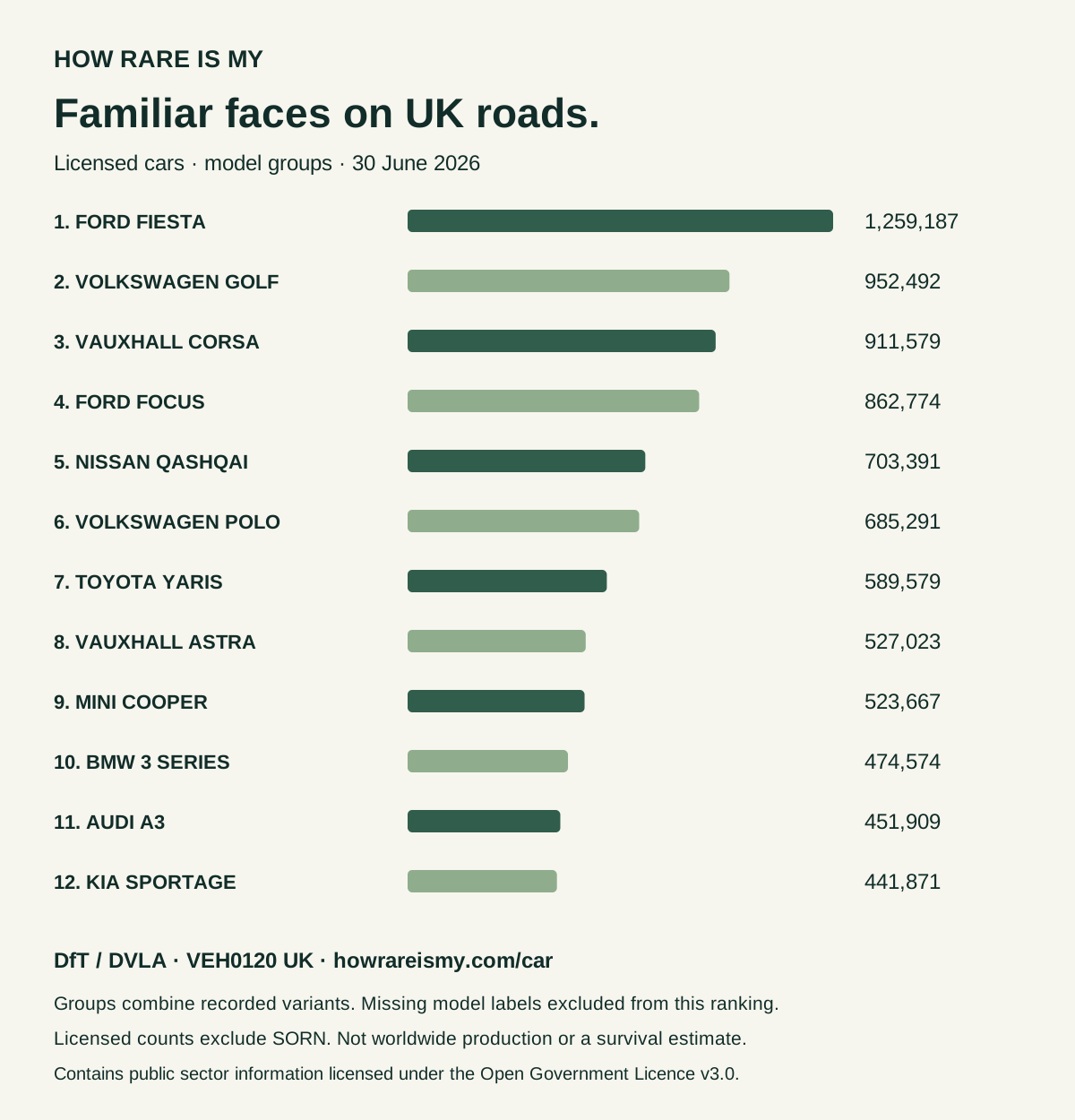
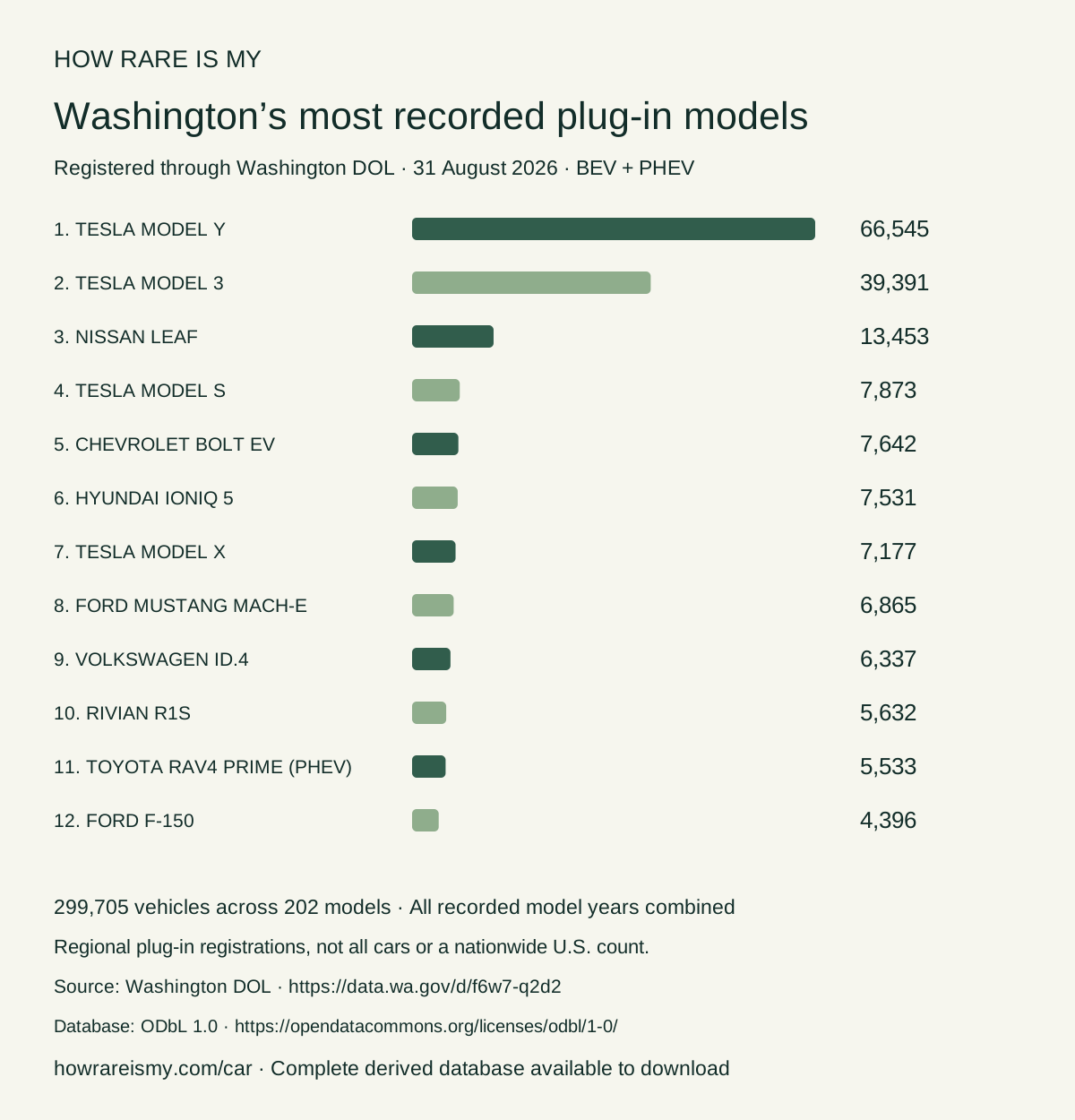
Choose your registration market
A car can be common in one country and unusual in another. The United Kingdom option covers licensed and SORN car records, including makes from around the world. The United States option currently covers Washington’s plug-in vehicle register. Select the reference before interpreting a count.
Look up your car in the UK
Search by make, model or both. The chooser keeps the names in the original UK reference and displays the number licensed beside each model. VW also finds Volkswagen; punctuation does not prevent MX5 from finding MX-5. Select a group to update the result, history and card together.
The main number is the model's licensed count on 30 June 2026. The second number shows SORN records separately. The percentage compares the licensed count with all 34,888,140 licensed cars in this source, including records whose model details are missing. The model-group rank excludes missing-model categories; #1 is most common.
For an exact recorded version, choose Load variant lookup, then select a variant. The same public file contains all 52,244 variants, so changing a model does not send that choice to a lookup service. Variant names are administrative labels, which may not match the wording on a sales brochure.
What the counts mean
The Department for Transport's VEH0120 UK file is built from DVLA registration and licensing records. This snapshot was released on 23 September 2026 and covers 48 quarter ends, from September 2014 through June 2026. We retain only its Cars body-type category.
Licensed means licensed for UK road use at that quarter end. SORN means a Statutory Off Road Notification was recorded. Neither label proves how often a car is driven or its mechanical condition. These are registration statistics, not factory production totals, sale prices or a census of every surviving vehicle.
The source's generic model groups combine recorded variants. We add fuel rows within each exact make, model group and variant, keeping the two licence statuses separate. All group and variant totals reconcile with the original car rows for every quarter. The downloaded group CSV includes the 417 categories whose model details are missing.
Why a model might be missing
Imported cars, older vehicles, unusual versions and new model codes can lack usable model detail. DfT's notes on make and model data explain these limitations. Those vehicles can still contribute to a missing-model category.
An absent search result therefore gets no rarity estimate. A published zero means zero records assigned to that group and status in that quarter; it does not prove the model has disappeared. Brand names and group definitions can also change between releases. This tool keeps the source labels rather than silently merging similar names.
Read the trend and compare two cars
The green line tracks licensed cars; the dashed brown line tracks SORN. Expand the table for all 48 exact quarterly counts, or download the history as CSV. The change figure compares June 2026 with June 2025, because licensing can vary by season. It is not an annual scrappage rate: imports, new registrations, licence changes and reclassification can affect the total.
The comparison panel always compares complete model groups from the same UK quarter. Both bars use licensed counts, with SORN underneath. A selected variant remains part of its parent group, so the comparison does not mix a trim count with another model's full population.
Keep a car rarity card
Preview a story or landscape card, choose a palette, then download a PNG or use your device's share sheet. The image retains the model or variant, licensed count, SORN count, UK scope, date and source. Your choice stays in the browser; no plate, VIN, account or personal profile is required.
Curious about a different kind of rarity? Compare your birthday, find your first name in U.S. birth records, or explore the language you use at home. Each has its own population and time period. The sources and method page explains why these results cannot be multiplied into a personal rarity score.
US car coverage
Choose United States · Washington plug-in vehicles to search 202 recorded make-and-model combinations in the Washington Department of Licensing’s Electric Vehicle Population Data. The source contains 299,705 distinct vehicles registered through Washington DOL as of 31 August 2026, published on 15 September. Owner addresses can be outside Washington; this is a DOL registration population, not a count of cars physically on Washington roads.
The file includes battery electric vehicles (BEVs) and plug-in hybrid electric vehicles (PHEVs). It excludes petrol-only cars and ordinary hybrids that do not plug in. Search a make or model, then optionally select a model year. The year bars divide one current snapshot by model year; they do not show past fleet sizes, new-car sales or production totals.
Every percentage uses the complete 299,705-vehicle plug-in reference. A selected model-year count remains part of its full model group and is not ranked against whole models. An unlisted model is unknown in this reference, not a claim that none exist in America. The complete model-year CSV contains every retained aggregate, with the source and Open Database License 1.0. Our derived database is available under that same license.
Why isn’t there one worldwide car count?
Registration datasets describe different places, dates, categories and administrative statuses. The UK file provides car model groups and licensed/SORN history. Washington’s file covers registered plug-in vehicles. Neither can be multiplied into a national or worldwide estimate, and the two counts should not be compared as if their populations were equal.
A VIN decoder identifies encoded vehicle attributes; it does not count how many similar cars remain. NHTSA describes that distinction in its VIN decoder information. We have not added a national U.S. count because the reviewed sources do not establish one. Wider coverage requires a suitable registration or production source with its own clearly labelled meaning.
For a different kind of discovery, the dog name generator uses published NYC license records to suggest names and show their local frequency.
Good questions
How can I find out how rare my car is?
Choose a registration market first. The UK option lets you search its make or model to see the number licensed in the United Kingdom at the end of June 2026, plus vehicles declared off road (SORN). A model group combines its recorded variants. Load the variant lookup to narrow the result. The figures do not measure worldwide production or value.
How many cars like mine are left in the UK?
The tool counts the licensed and SORN records assigned to a model in DfT's UK file. It cannot establish how many physically survive: some vehicles have incomplete model information, and licensing is not a condition inspection. A missing search result is unknown, not zero.
Can I check car rarity by registration plate or VIN?
This tool searches public make and model statistics. It does not look up registration plates, decode VINs or retrieve a vehicle's private history. You do not need to enter either identifier.
What does SORN mean?
SORN stands for Statutory Off Road Notification. These are vehicles declared off the road, shown separately from licensed vehicles. Owners can re-license them. A SORN record does not establish a car's mechanical condition.
Does this cover cars in the United States?
The U.S. option covers battery electric and plug-in hybrid vehicles registered through Washington’s Department of Licensing as of 31 August 2026. It includes 202 models and model-year detail. It is not a nationwide count, and petrol-only cars and conventional hybrids are outside that reference.
Why can a rare variant belong to a common model group?
DfT groups multiple recorded versions under a generic model, sometimes across trims and generations. The group count and the individual variant count answer different questions. Fuel rows are combined within each exact recorded variant.