Read the ranking
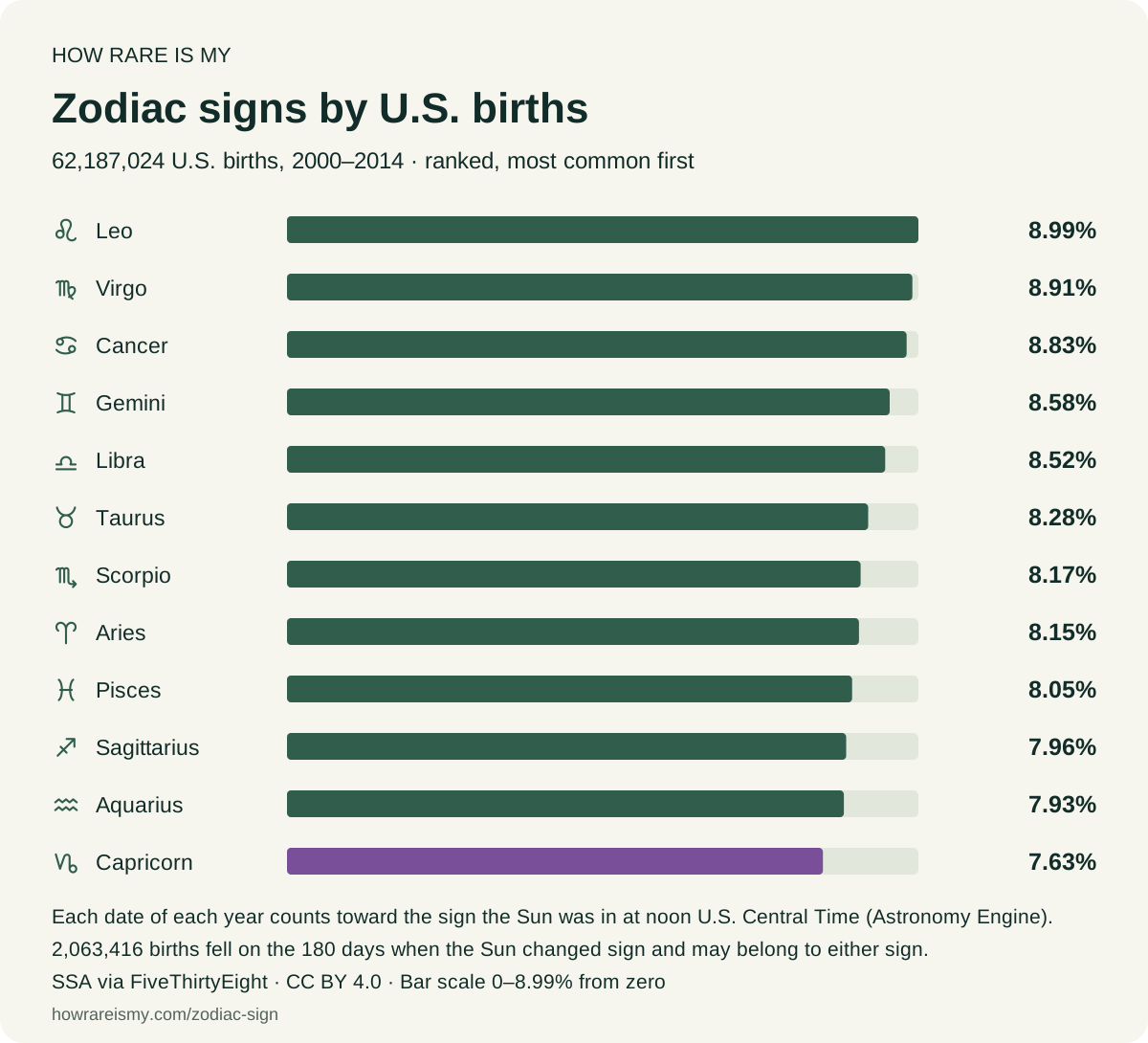
Choose your sign to see its share of all births in the file, its rank among the twelve signs and how that compares with an even split. If every sign were equally common, each would hold 8.33% of births. The verdicts compare each sign with that even split: within 4% of it is about average, and further away is more common or rarer than most.
Births per day divides a sign’s births by the number of days it covered in the fifteen years. Signs last 29 to 32 days, so this second figure shows whether a sign is common because it is long or because more babies were born during it. The share answers the question most people ask: how many people have my sign?
The rarest zodiac sign
Capricorn is last on both measures: the smallest share of births and the fewest births per day. Its dates run through the winter holidays. December 25, January 1 and December 24 are three of the five rarest birthdays in the complete birthday ranking, and all three fall in Capricorn.
At the other end, Leo and Virgo cover late July to late September, when the file records the most births per day. Leo has the largest total because it spans slightly more days than Virgo.
Cusp birthdays
The Sun does not change sign at the same moment every year. Between 2000 and 2014 it entered most signs on one of two neighbouring calendar dates, at a different hour each time. Many horoscope tables start Aries on March 21, but in these years the Sun entered Aries on March 20 in U.S. time every year, before noon Central Time in nine of them.
To handle this, each date in each year counts toward the sign the Sun was in at noon U.S. Central Time on that date. On the 180 days when the Sun changed sign, people born before and after the change have different signs, and the file does not record birth times. Those days hold 2.06 million births, about 3.3% of the total. Splitting them by the hour of each change instead gives the same order for all twelve signs.
Where the numbers come from
The births are the Social Security Administration’s daily U.S. counts for 2000 to 2014, compiled by FiveThirtyEight under CC BY 4.0: the same file behind our birthday rankings. The Sun’s position for every date comes from the open-source Astronomy Engine library. Read the full zodiac method.
This is a count of birthdays, not astrology. It does not describe personality, compatibility or luck, and it covers only the United States in these fifteen years. For another curiosity with its own source, try the first-name lookup or eye-color chart.
Good questions
What is the rarest zodiac sign?
Capricorn. It accounts for 4,746,788 of the 62,187,024 U.S. births from 2000 to 2014, or 7.63%, about 1 in 13.1. It also has the fewest births per day of any sign, so its low share is not only because it is one of the shortest signs.
What is the most common zodiac sign?
Leo, with 5,592,339 births (8.99%, about 1 in 11.1). Virgo is close behind at 8.91% and has the most births per day; Leo covers slightly more days, which gives it the larger total.
Why aren’t the signs equally common?
Two reasons. The Sun spends 29 to 32 days in each sign, so longer signs collect more birthdays. Births are also uneven through the year: this file has more births per day in late summer and early autumn and fewer around the winter holidays.
I was born on a cusp. Which sign am I?
It depends on the year and time you were born. The Sun changes sign on a different date and hour each year. Enter your birthday above: if it is a cusp date, the result says how many of the 15 years in this file had a sign change on that date.
Is this ranking the same worldwide?
Not necessarily. These are U.S. births from 2000 to 2014. Birth seasons differ between countries, hemispheres and decades, so another country or period can rank the signs differently.
Does a rare sign say anything about personality?
No. This page counts birthdays. It makes no claim about personality, compatibility or horoscopes.
Is this a zodiac sign rarity filter?
This page is not a camera filter. It counts real U.S. birthdays for each sign and saves a story-sized card you can add to a story, video or message. It is not an official TikTok or Instagram filter.